How to Design a Complete Medium Frequency Induction Melting Plant
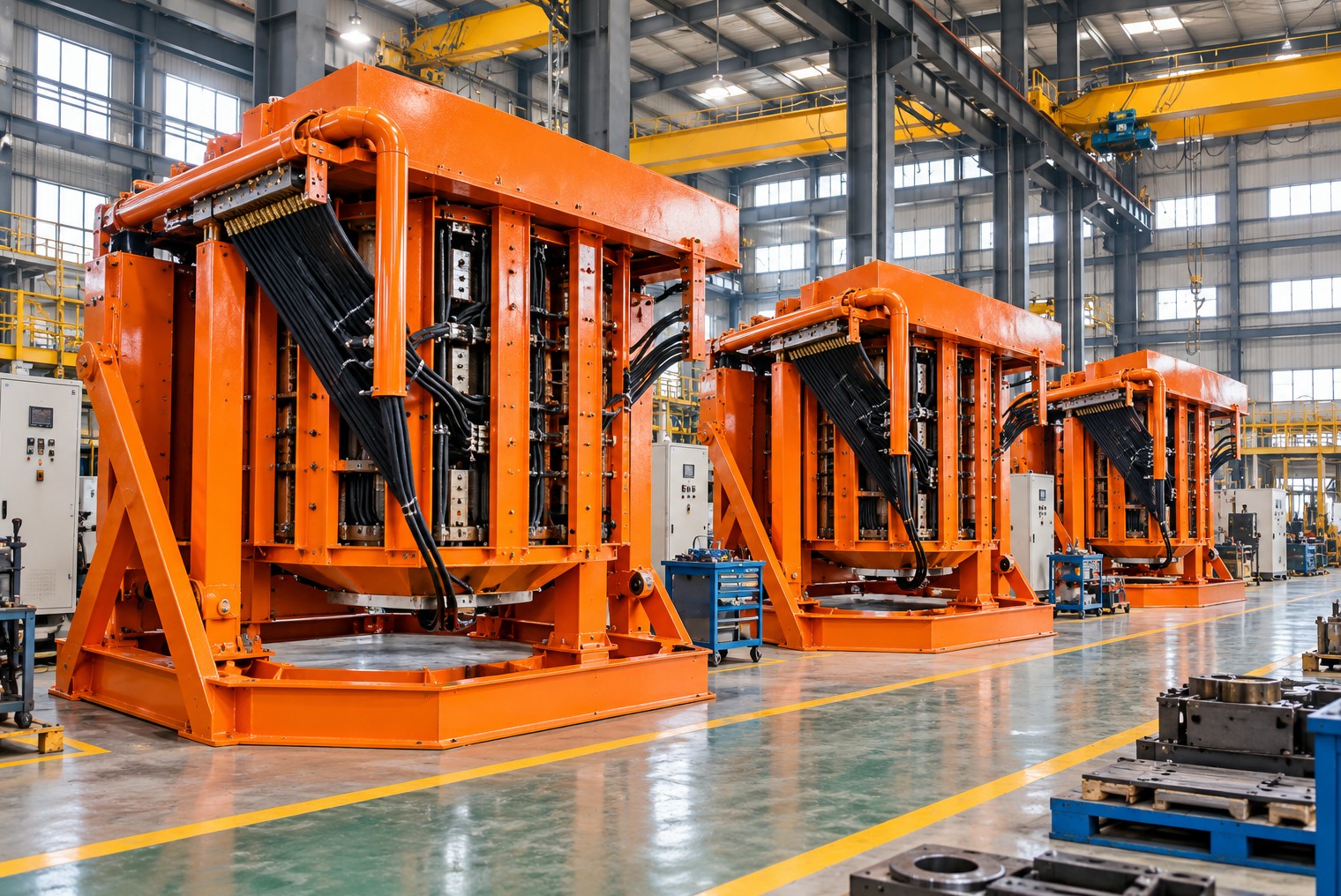
Designing an induction melting plant requires more than selecting a furnace.
A successful project must coordinate electrical power, furnace capacity, cooling, hydraulic equipment, refractory lining and production requirements.
Step 1: Define the metal
Start with the material:
- Steel
- Cast iron
- Stainless steel
- Copper
- Aluminum
- Aluminum alloys
- Brass
- Other non-ferrous metals
Step 2: Determine production capacity
Define:
- Batch size
- Required tons per hour
- Number of melting cycles
- Operating hours
- Required holding capacity
Step 3: Select furnace capacity
The furnace capacity should be selected according to production requirements.
Possible configurations range from small furnaces to large 20T, 30T and 40T systems and beyond.
Step 4: Select power
Power should be selected according to the desired melting rate.
The power supply, transformer, capacitor bank and coil must be matched.
Step 5: Select furnace configuration
A plant may use a single furnace, or a one-to-two furnace system.
The second configuration can allow melting and holding operations to be performed using two furnace bodies.
Step 6: Design the cooling system
The cooling system must be sized according to the actual thermal load.
It may include:
- Closed circuit cooling tower
- Crossflow cooling tower
- Water cooling station
- Pumps
- Water-cooled cables
- Coil cooling circuit
Step 7: Select the tilting system
Depending on furnace size and application, the furnace may use:
- Hydraulic tilting
- Speed reducer tilting
- Mechanical tilting
Step 8: Integrate the system
The final plant should be engineered as one system:
- Transformer
- Medium frequency power supply
- Capacitor bank
- Induction coil
- Magnetic yoke
- Induction furnace
- Hydraulic tilting
- Molten metal
The cooling system is connected to the relevant water-cooled components.
Step 9: Confirm technical data
Before manufacturing, the following should be confirmed:
- Furnace capacity
- Rated power
- Frequency
- Voltage
- Melting rate
- Cooling water flow
- Furnace dimensions
- Tilting method
- Electrical requirements
- Installation conditions
Conclusion
The best induction melting plant is not simply the furnace with the highest power.
It is a properly engineered combination of furnace, power supply, transformer, capacitor bank, coil, magnetic yoke, cooling system, hydraulic system and auxiliary equipment.
A complete system approach allows the equipment to be designed around the customer's actual production requirements.
From individual furnace components to a complete medium frequency induction melting plant, system-level engineering is the key to reliable industrial operation.
Related equipment
- GW Series Melting Furnace
- One-to-Two Furnace System
- KGPS Series Power Supply
- Induction Furnace Transformer
- FBT Closed-Circuit Cooling Tower
- Hydraulic Tilting System
- Induction Coil