
Induction Furnace for Aluminum Melting: Furnace and Holding System
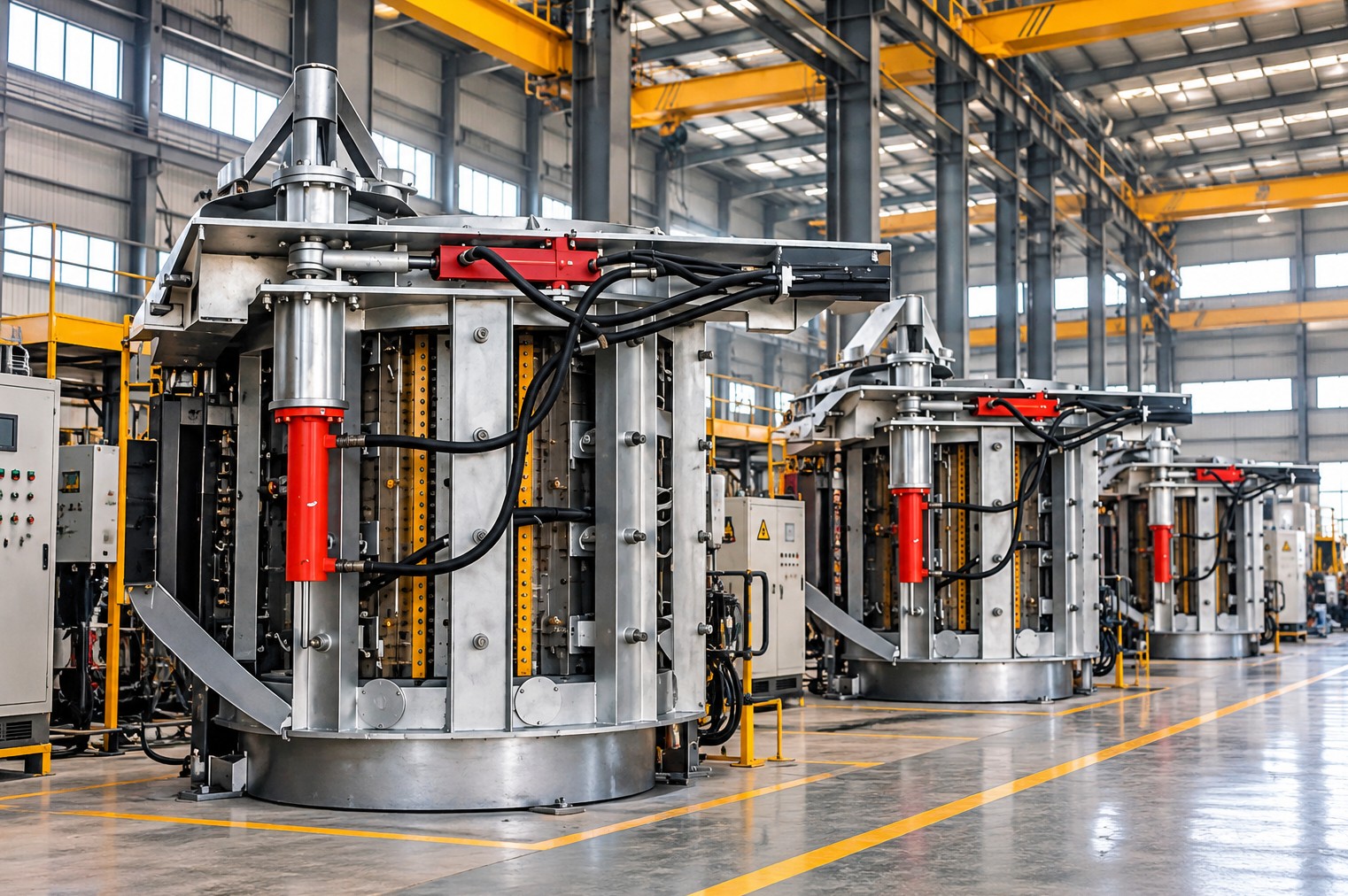
Aluminum melting applications require careful control of temperature, production rate and molten-metal handling.
An induction furnace system can be configured for aluminum melting as well as holding and casting operations.
Aluminum melting furnace
The melting furnace is used to convert solid aluminum or aluminum alloy charge into molten metal.
The required furnace power depends on:
- Furnace capacity
- Melting rate
- Aluminum alloy
- Starting temperature
- Production schedule
Holding furnace
After melting, molten aluminum may need to remain at a controlled temperature before casting.
A separate holding furnace can provide this function.
One-to-two system
A one-to-two power supply system can be configured so that:
Furnace A = melting
Furnace B = holding
This arrangement can provide flexibility for casting operations.
Cooling system
The induction coil and electrical equipment require reliable cooling.
A complete cooling system may include cooling towers, water cooling stations and water-cooled cables.
Complete aluminum system
A typical system can include:
- Transformer
- Medium frequency power supply
- Capacitor system
- Aluminum melting furnace
- Holding furnace
- Hydraulic tilting
- Cooling system
- Water-cooled connections
Conclusion
For aluminum production, furnace selection should consider both melting and downstream casting requirements.
A coordinated melting and holding system can provide greater flexibility than a standalone melting furnace.
Related equipment
- GW Series Melting Furnace
- GWB Series Holding Furnace
- One-to-Two Furnace System
- KGPS Series Power Supply
- FBT Closed-Circuit Cooling Tower
- Hydraulic Tilting System